2026 Spring Anji Bai Cha — Premium White Leaf Green Tea | Anji County, Zhejiang
2026 Spring Anji Bai Cha — Premium White Leaf Green Tea | Anji County, Zhejiang
China's Most Misunderstood Tea — And Its Most Extraordinary
The name says "white tea." The cup tells a different story. Anji Bai Cha (安吉白茶) is, in fact, a rare variety of green tea — one of the most prized and expensive in all of China. The "white" refers not to processing, but to the leaves themselves: during a brief window each spring, a rare genetic trait causes the young buds to emerge almost colorless, pale jade-white, before the warmth of the season deepens them to green.
This fleeting transformation produces a tea unlike any other: extraordinarily high in amino acids, naturally sweet, with a smooth umami depth that rivals the finest Japanese gyokuro — yet entirely its own.
Why Anji Bai Cha Is Exceptional
- Amino acid content: 5–10× higher than regular green tea — the source of its signature umami sweetness and creamy body
- Minimal bitterness: The pale leaves contain less chlorophyll and fewer tannins, producing a remarkably smooth, gentle cup
- Rare harvest window: The white-jade leaf phase lasts only 15–20 days each spring — making early-season Anji Bai Cha inherently limited
- Origin-protected: Authentic Anji Bai Cha can only come from Anji County, Zhejiang Province — a GI-protected designation
Tasting Notes
- Aroma: Delicate orchid and fresh spring grass, clean and uplifting
- Taste: Rich umami sweetness with a creamy, almost buttery body
- Mouthfeel: Silky smooth, with no astringency
- Finish: Long, sweet, and refreshing — a lingering natural sweetness
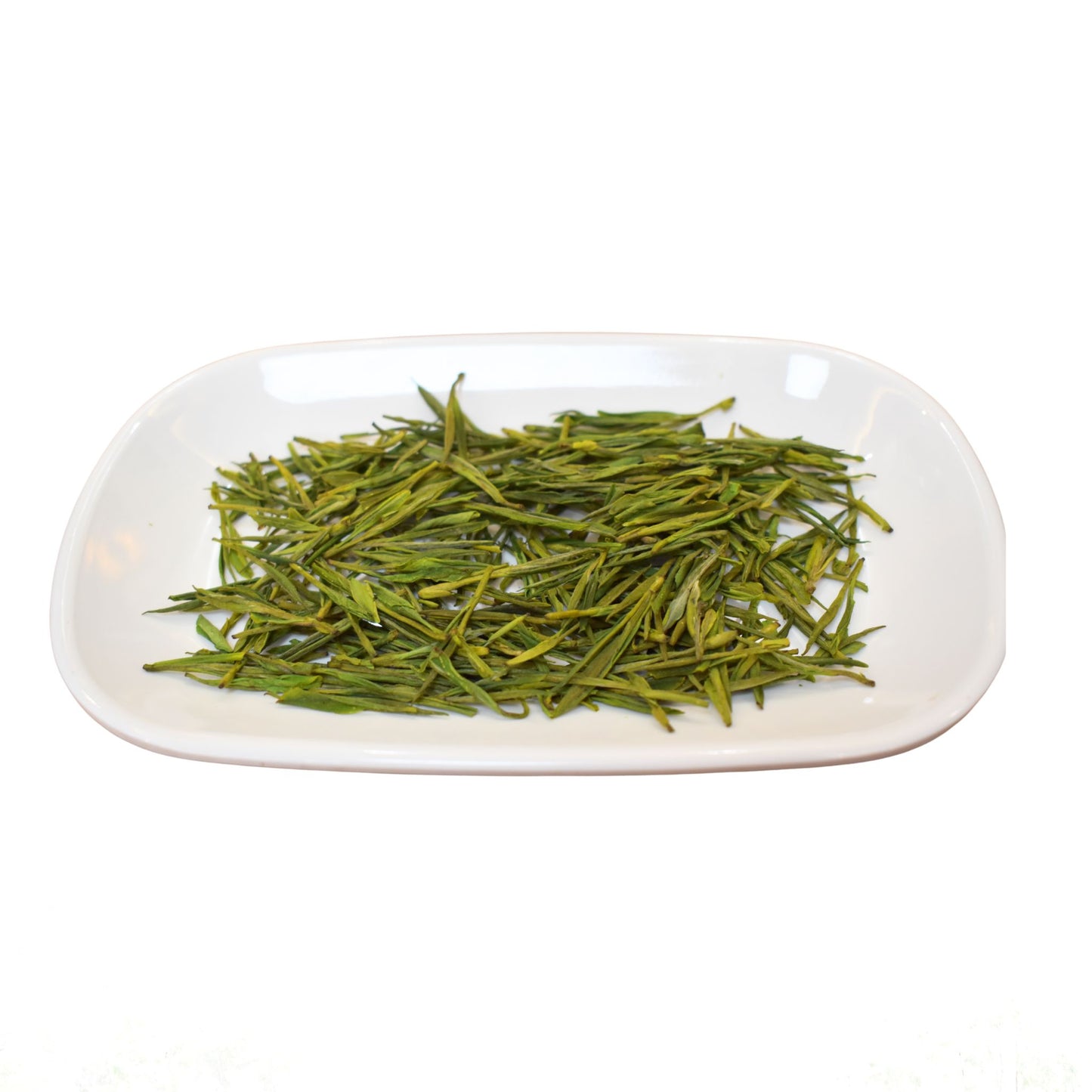
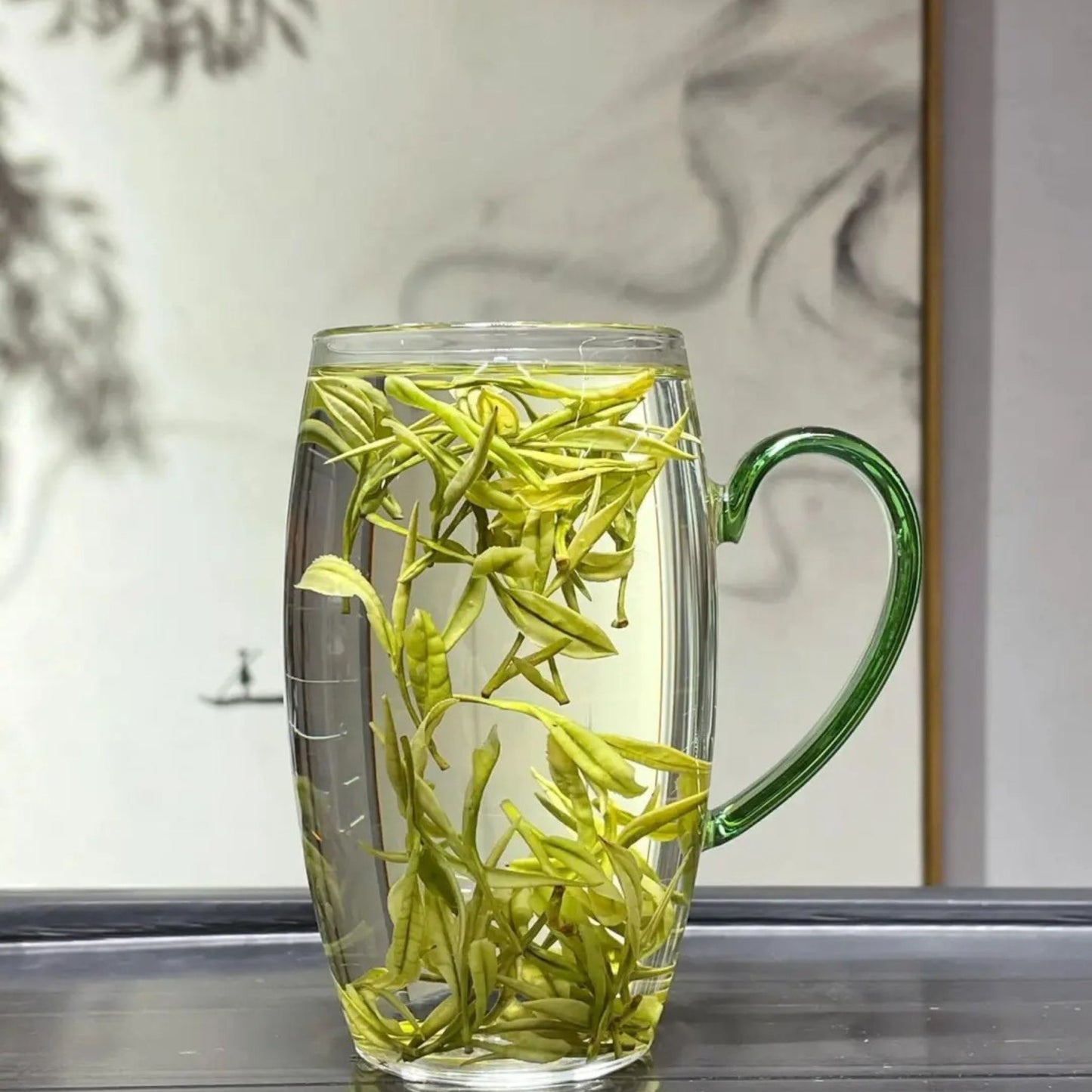
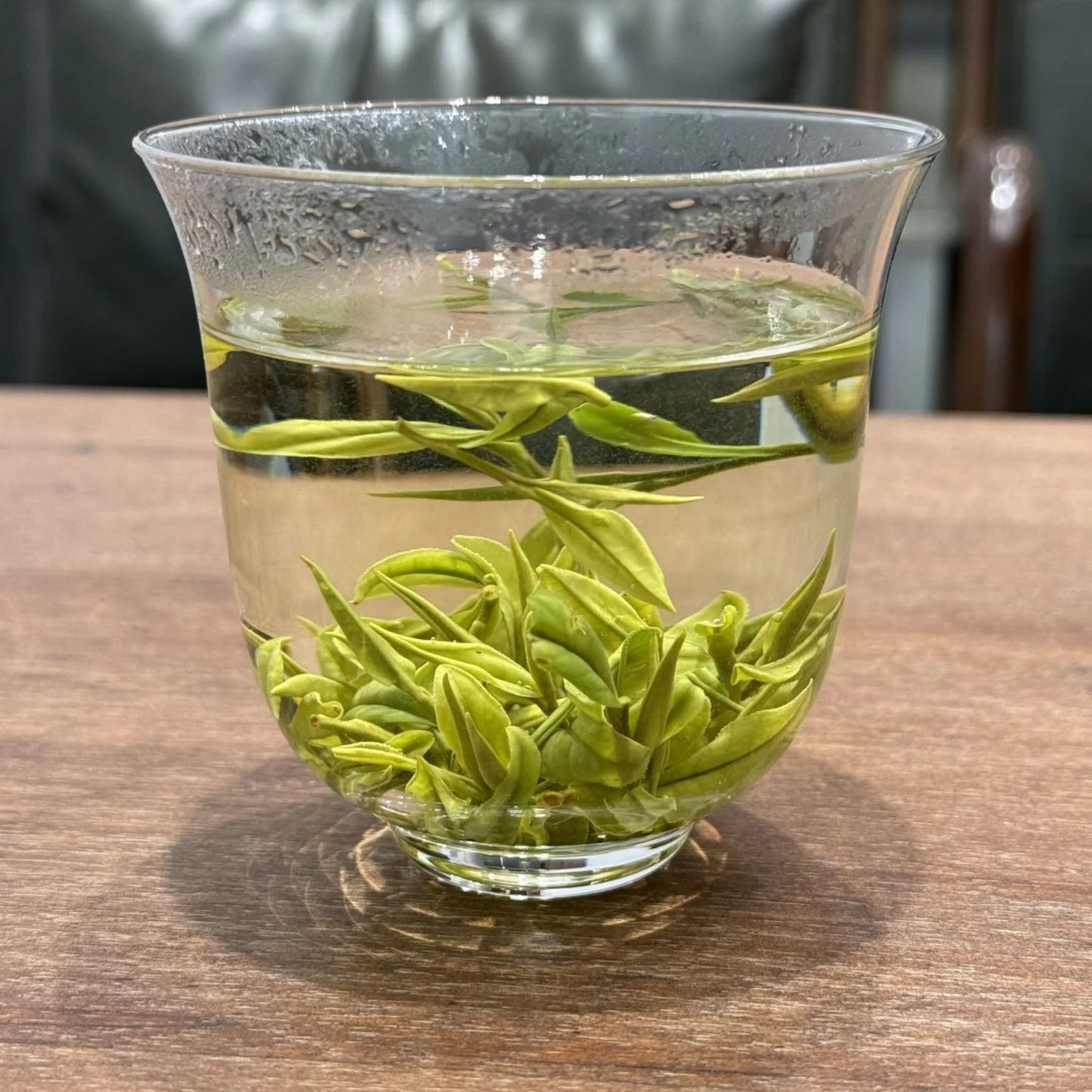
- Appearance: Pale jade-white needle-shaped leaves that unfurl beautifully in the cup
Harvest & Origin
- Harvest: Spring 2026 — early season, peak white-leaf phase
- Origin: Anji County (安吉县), Zhejiang Province, China
- Altitude: Mountain-grown, bamboo forest microclimate
- Type: Green tea (despite the name — processed as green tea, not white tea)
- Grade: Premium
Brewing Guide
- Tea: 3g per 150ml
- Water: 70–75°C (158–167°F) — lower temperature is essential to protect the delicate amino acids and prevent bitterness
- 1st steep: 60–90 seconds
- Subsequent steeps: Add 30 seconds each; 2–3 infusions total
- Vessel: Glass cup or gaiwan — watch the pale leaves slowly unfurl and turn green as they steep
- Water: Filtered or spring water recommended
- Tip: The visual experience is part of the pleasure — use a clear glass to see the leaves transform from white to green
Fifteen days a year. One county in Zhejiang. This is what rare truly means.
Product Description
Product Description
Premium 2025 Anji Bai Cha Green Tea - Fresh Harvest White Leaf Tea
Experience the exceptional quality of this 2025 vintage Anji Bai Cha (安吉白茶) green tea, one of China's most unique and prestigious teas. This 50-gram package represents the fresh spring harvest of premium grade Anji Bai Cha, renowned for its rare white-jade colored leaves, exceptional umami sweetness, delicate floral character, and extraordinarily high amino acid content. Despite its name "White Tea," Anji Bai Cha is actually a rare variety of green tea with distinctive pale leaves.
Anji Bai Cha - The Rare White Leaf Green Tea
Anji Bai Cha (安吉白茶 - Anji White Tea) is a rare and precious green tea originating from Anji County in Zhejiang Province, China. The name "White Tea" refers not to the processing method, but to the unique pale, almost white color of the young tea leaves during early spring. This rare genetic mutation occurs only during a brief period in early spring when temperatures are cool, causing the leaves to produce minimal chlorophyll and appear white-jade in color. This unique characteristic makes Anji Bai Cha one of the most sought-after and expensive green teas in China.
2025 Fresh Spring Harvest
This tea represents the 2025 fresh spring harvest, captured during the brief window when the leaves display their characteristic white-jade color. Early spring Anji Bai Cha is the most prized, offering the highest amino acid content, most delicate flavor, and greatest nutritional value.
Exceptionally High Amino Acid Content
Anji Bai Cha contains extraordinarily high levels of amino acids, particularly theanine, which can be 5-10 times higher than regular green teas. This exceptional amino acid content creates the tea's distinctive umami sweetness, smooth mouthfeel, and calming yet alert mental state. The high theanine content also contributes to the tea's low bitterness and exceptional smoothness.
Distinctive Flavor Profile
The flavor profile is umami, sweet, floral, and delicate, delivering a harmonious balance of savory umami richness, natural sweetness, subtle floral notes, and refined elegance. The tea has a smooth, almost creamy mouthfeel with a clean, refreshing finish and lingering sweetness.
Health Benefits
Anji Bai Cha is exceptionally rich in amino acids, antioxidants, and polyphenols, offering comprehensive wellness support. The tea is refreshing and energizing yet calming, supports skin health and protection, aids in stress reduction, promotes mental clarity and focus, and contains lower caffeine than most green teas due to its unique leaf chemistry.
Key Features
Key Features
Key Features:
Tea Type: Green Tea - Anji Bai Cha (安吉白茶 - White Leaf Tea)
Vintage: 2025 fresh spring harvest
Weight: 50 grams
Grade: Premium grade
Origin: Anji County, Zhejiang Province, China
Unique Characteristic: Rare white-jade colored leaves from genetic mutation
Amino Acid Content: Exceptionally high (5-10x higher than regular green tea)
Flavor Profile: Umami, sweet, floral, delicate
Mouthfeel: Smooth, creamy, refined
Appearance: Pale white-jade to light green leaves with distinctive appearance
Health Benefits: Rich in amino acids, refreshing, skin-protecting, low-caffeine
Reputation: One of China's most rare and expensive green teas
Brewing Guidance
Brewing Guidance
Brewing Guide:
Tea Amount: 3 grams per 150ml (about 1 teaspoon)
Water Temperature: 70-75°C (158-167°F) - use lower temperature to preserve delicate amino acids and prevent bitterness
Steeping Time: 1-2 minutes for first infusion
Subsequent Infusions: Can be re-steeped 2-3 times, increasing time by 30 seconds each
Teaware: Glass cup or gaiwan recommended to appreciate the beautiful pale leaves
Water: Use filtered or spring water for best results
Important: Avoid high temperatures which can destroy the delicate amino acids
Share
Couldn't load pickup availability