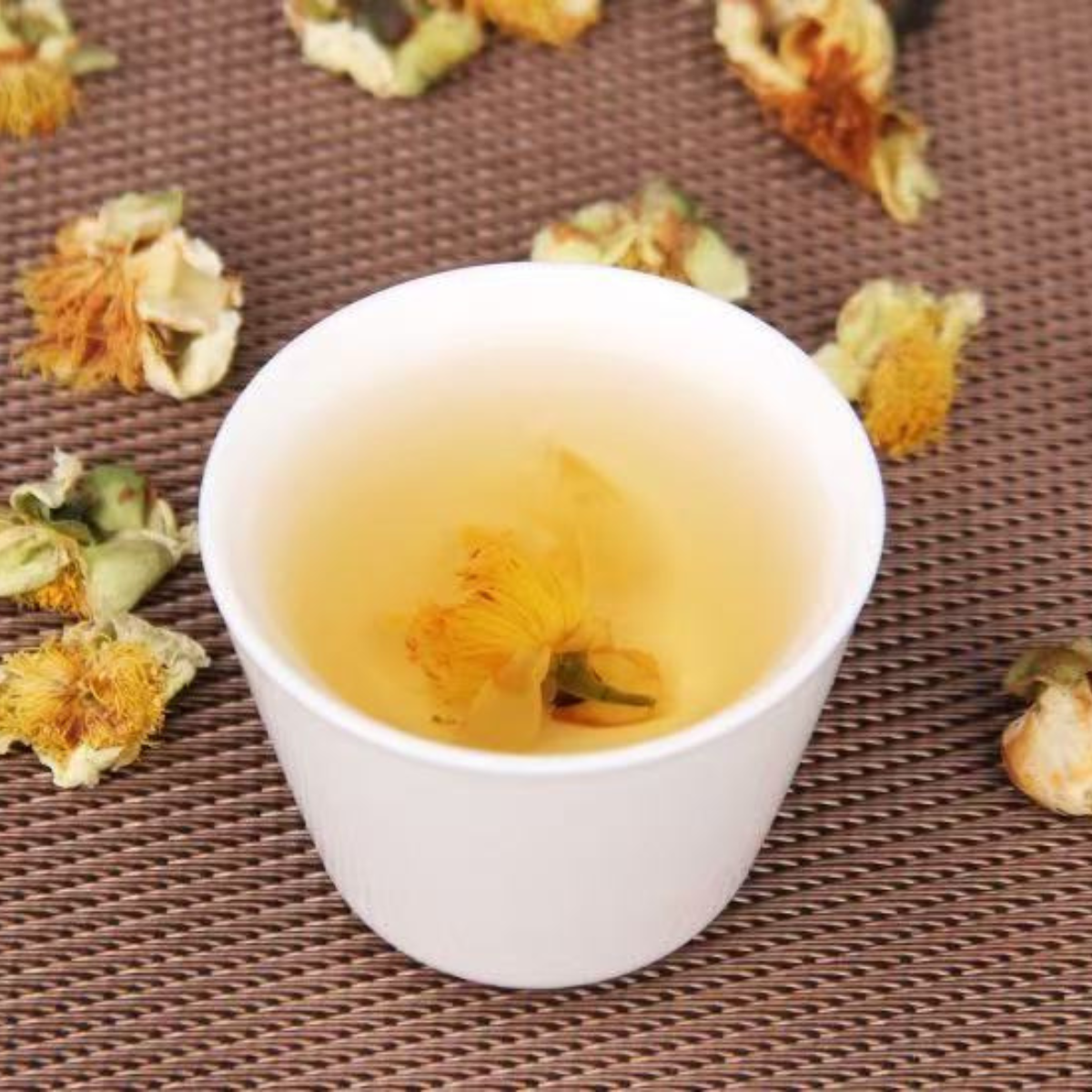
Yunnan Pu-erh Tea Flowers — Rare Ancient Tree Harvest | Honey Sweet, Gentle & Caffeine-Light
Yunnan Pu-erh Tea Flowers — Rare Ancient Tree Harvest | Honey Sweet, Gentle & Caffeine-Light
The Rarest Gift of the Tea Tree — Yunnan Pu-erh Tea Flowers
Tea flowers are not tea leaves. They are something rarer, quieter, and more fleeting. Blooming only in the autumn and winter months — September through December — the small white blossoms of the Yunnan tea tree appear in abundance only when the tree is under stress, channeling its energy into flowering rather than new growth. Ancient tea trees flower least of all. Which is why genuine ancient-tree pu-erh tea flowers are a true rarity: a seasonal, limited by-product of trees that have been growing for generations, offering a cup that is unlike any tea leaf you have ever tasted.
What Pu-erh Tea Flowers Taste Like
Forget everything you know about pu-erh. Tea flowers share the tree, but not the character. The liquor is a pale, luminous golden-yellow — clear and bright. The aroma is clean and naturally sweet: a gentle honey sweetness, a soft floral note, and a faint wild mountain freshness that is completely free of the concentrated intensity of artificial flower fragrance. In the cup, the taste is light, clean, and softly sweet — smooth and flowing, with virtually no bitterness or astringency, and a gentle, refreshing sweetness that rises back through the throat. The body is light and delicate — nothing like the thickness of pu-erh leaf. Served cool, the honey sweetness becomes even more vivid.
Lower Caffeine. Gentler Character.
Tea flowers contain significantly less caffeine than tea leaves, and their composition — higher in tea polysaccharides and flavonoids, lower in tannins — makes them naturally gentler and less stimulating. For those who love the world of pu-erh but want something lighter, softer, and more approachable, tea flowers offer a completely different experience from the same remarkable trees.
Two Ways to Enjoy
Pure Tea Flower: Brew alone for the cleanest expression of honey sweetness and delicate floral character — light, refreshing, and effortlessly drinkable.
Blended with Raw Pu-erh: Add a small amount of tea flowers to your raw pu-erh session. The flowers soften the bitterness and astringency of the sheng, adding a layer of honey sweetness and floral fragrance that transforms the experience.
What Makes This Special
- Ancient Tea Tree Origin — Flowers from old-growth Yunnan tea trees; genuinely rare and seasonal
- Autumn-Winter Harvest — Blooms September–December; a fleeting seasonal product
- Naturally Honey Sweet — Clean, gentle sweetness with soft floral and wild mountain notes
- Virtually No Bitterness or Astringency — Far gentler than pu-erh leaf; smooth and effortless to drink
- Lower Caffeine — Significantly less caffeine than tea leaves; a lighter, calmer cup
- Rich in Polysaccharides & Flavonoids — A different nutritional profile from standard pu-erh
- Versatile — Brew alone or blend with raw pu-erh to soften bitterness and add floral sweetness
- Clean & Pure — No mold, no off-notes; select only clean, fragrant dried flowers
Good to Know
- Tea flowers have a cooling nature — those with cold stomachs or digestive sensitivity should avoid drinking large amounts or on an empty stomach
- Not recommended for pregnant women or during menstruation
- Despite lower caffeine, sensitive individuals may still experience sleep disruption if consumed in large quantities at night
- Brew resistance is limited — flavor fades after 3–5 infusions; this is normal for tea flowers
- Always select clean, fragrant dried flowers with no dark spots, mold, or off-odors
Product Description
Product Description
Pu-erh tea flowers are one of Yunnan’s most quietly remarkable seasonal products. The small white blossoms of the tea tree — with their golden stamens and delicate petals — appear each autumn and winter, blooming most abundantly when the tree is under nutritional stress. Ancient tea trees, with their deep roots and established vitality, flower least of all. Which is why ancient-tree tea flowers are genuinely rare: a seasonal by-product of trees that have been growing for generations, available only in limited quantities each year.
The dried flowers are made by withering and drying the fresh blossoms at harvest — a simple process that preserves their natural honey sweetness and delicate floral character. In the cup, they produce a pale golden-yellow liquor that is completely unlike pu-erh leaf: light, clean, and softly sweet, with virtually no bitterness or astringency. The aroma is gentle and natural — honey sweetness, a soft floral note, and a faint wild mountain freshness. Served cool, the honey character becomes even more vivid.
Tea flowers contain significantly less caffeine than tea leaves and have a different nutritional composition — higher in polysaccharides and flavonoids, lower in tannins — making them naturally gentler and less stimulating. They can be brewed alone for a pure, delicate experience, or blended in small amounts with raw pu-erh to soften its bitterness and add a layer of honey sweetness and floral fragrance.
A seasonal rarity. A gentle cup. A completely different way to experience the ancient tea tree.
Key Features
Key Features
• Ancient Tea Tree Origin — Flowers from old-growth Yunnan tea trees; genuinely rare and seasonal
• Autumn-Winter Harvest — Blooms September–December only; a fleeting, limited seasonal product
• Naturally Honey Sweet — Clean, gentle sweetness with soft floral and wild mountain freshness
• Virtually No Bitterness or Astringency — Far gentler than pu-erh leaf; smooth and effortless
• Lower Caffeine — Significantly less caffeine than tea leaves; a lighter, calmer cup
• Rich in Polysaccharides & Flavonoids — Higher polysaccharide content than standard pu-erh leaf
• Two Ways to Brew — Pure flower for clean honey sweetness; blend with raw pu-erh to soften bitterness
• Clean & Pure — No mold, no off-notes; carefully selected and dried
Brewing Guidance
Brewing Guidance
Water Temperature: 85–90°C (185–194°F) — do not use fully boiling water; lower temperature preserves the delicate honey and floral character
Leaf Amount: 2–3g per 150–200ml
Method 1 — Pure Tea Flower:
• Quick rinse: Pour hot water over the flowers briefly and discard — this opens the flowers and removes any surface dust
• Steep for 30–60 seconds for the first infusion; adjust to taste
• The honey sweetness is most vivid in the first 2–3 infusions
• Brew resistance: 3–5 infusions (flavor fades naturally after this — this is normal for tea flowers)
Method 2 — Blended with Raw Pu-erh:
• Add a small amount of tea flowers (0.5–1g) alongside your usual raw pu-erh portion
• Brew together as normal — the flowers will soften the bitterness and astringency of the sheng and add a layer of honey sweetness and floral fragrance
• Adjust the flower ratio to taste
⚠️ Please note:
• Tea flowers have a cooling nature — avoid large amounts or drinking on an empty stomach if you have a cold stomach or digestive sensitivity
• Not recommended for pregnant women or during menstruation
• Despite lower caffeine, sensitive individuals should avoid large quantities in the evening
• Always select clean, fragrant dried flowers — discard any with dark spots, mold, or off-odors
Share
Couldn't load pickup availability